
What is Okumidori matcha, and is it right for your cafe?
At a glance
- Okumidori is a cultivar, a named tea plant: late-budding, bred from Yabukita and registered in 1974. The word says nothing about region, grade or harvest.
- Three products carry the name: first-flush single-cultivar Okumidori, a blend that includes it, and later-flush leaf for cooking. They differ in color, bitterness and where they belong on a cafe menu.
- Before ordering, ask the flush, the blend share, the region and year, and whether the sample lot is the lot you will receive. Then test it against your current matcha in the milk you serve, at your house dose.
Okumidori matcha is matcha ground from Okumidori (おくみどり), a late-budding Japanese tea cultivar registered in 1974, and a first-flush lot of it usually drinks sweet and low in bitterness, with a deep green that holds in milk. Whether it is right for your cafe depends on two things the name leaves out: which harvest the leaf came from, and whether the bag holds Okumidori alone or a blend.
What is the Okumidori cultivar?
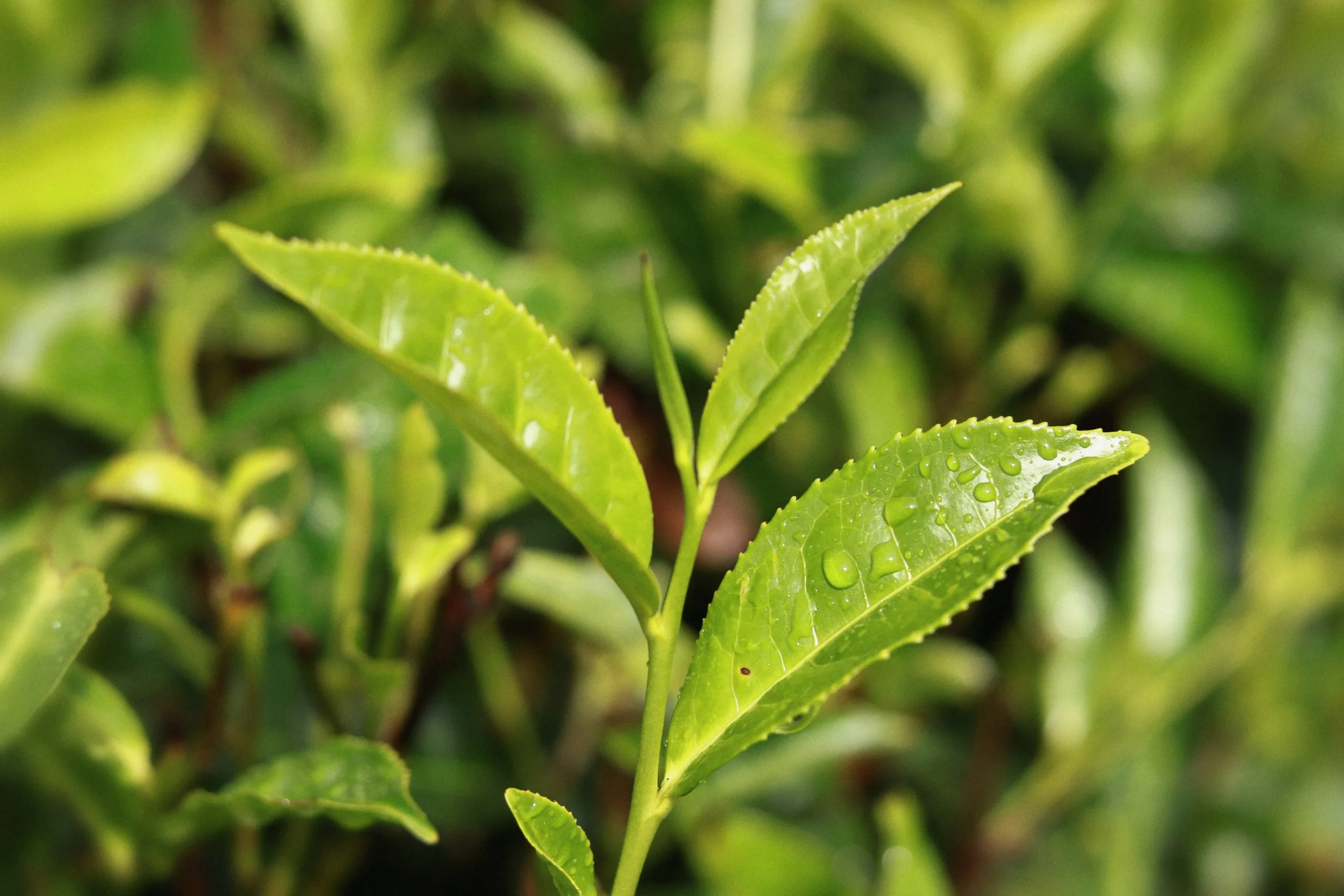
A cultivar is a named tea plant, so Okumidori tells you the plant and nothing about the region, the grade or the harvest. It was bred from Yabukita, the cultivar behind most Japanese tea, crossed with a native Shizuoka tea, and it was registered as a cultivar for sencha. Okumidori vs Yabukita, in one line: it buds later and makes a matcha at least as green. The rest of that comparison is in our cultivar sourcing guide.
In Japan, growers plant a late-budding (晩生, bansei) cultivar so their fields don’t all come ready on the same day. In Kumamoto, Okumidori is ready to pick an average of 6.3 days after Yabukita, and mixing early and late cultivars can widen a farm’s best first-flush picking window to 14 days. In a Kagoshima trial of the leaf made for matcha (碾茶, tencha), first-flush Okumidori came out a deeper, more vivid green than the other cultivars tested. In Nagasaki, first-flush Okumidori matcha scored 4.2 out of 5 for color, and the same plant’s second flush scored 3.2. A cafe can copy the trials: never take a cultivar name without its harvest.
What does an Okumidori matcha latte taste like?
A cafe buyer asks three things of a latte matcha: no bitterness, a green that survives the milk, and the same drink on the next order. A first-flush Okumidori is strong on the first two. It reads sweet and rounded rather than sharp, and color is the trait Japan’s trials single it out for. Milk mutes a pale matcha, so a deep green is the one that still looks like matcha in the cup.
Hisa’s Miyabi is one worked example: first-harvest matcha from Uji, Kyoto, made from Okumidori alone, and listed as vivid in milk with a nutty finish. The third need depends on the lot more than the cultivar, and a single lot can miss its cultivar’s range. That is why the test below runs in your own milk. For choosing a latte matcha more broadly, see the best matcha for cafe lattes.
Does “Okumidori” on the label tell you what you’re buying?
No. The word names the plant, and at least three different products carry it.
| On the label | What is in the bag | Color in milk | Bitterness and astringency | Where it fits on a cafe menu |
|---|---|---|---|---|
| Single-cultivar Okumidori, first flush | Spring leaf from Okumidori alone, shaded and made for matcha | Deep green that holds | Low | Lattes, and matcha whisked with water where the tea is the point |
| A blend “with Okumidori” | Okumidori as one of several cultivars | Set by the whole blend | Set by the whole blend | A house latte, if the blend passes your milk test |
| Later-flush Okumidori for food use | Leaf from the second flush (二番茶, nibancha) or later | Less vivid | Higher | Baking, soft serve and other cooking |
A single cultivar Okumidori matcha can sit in the first row or the third, so the harvest matters as much as the word “single”. The Nagasaki scores above are one cultivar, two harvests. The middle row is the one to read twice, because a blend can list Okumidori and still be mostly another cultivar. How a blend is built is in single cultivar vs blended matcha, and what separates the harvests is in first flush vs second flush matcha.
How should a cafe buy Okumidori matcha?
Ask before you taste, then taste in your own milk. These questions turn the word on the label into a spec a supplier can answer in writing:
- Which flush is it: first flush (一番茶, ichibancha) or a later one?
- Is it Okumidori alone? If it is a blend, what share is Okumidori, and what else is in it?
- Which region, and which year?
- Was the leaf shaded and made as tencha for matcha, or is it powdered sencha?
- Is the lot you sample the lot you will receive when you order?
Then put the sample next to the matcha you pour now. The bench rules and scoring are in how to evaluate matcha samples.
- Make both at your house dose from the dose and temperature guide, in the milk you serve most.
- Build them the same way at the same time, and mark the cups underneath so the tasters can’t tell which is which.
- Compare the green as soon as both drinks are built, then again after they have stood as long as a drink waits at your pass.
- Taste for bitterness at the finish first, then for sweetness.
- Choose the one you would serve, and ask whether the next order comes from the same harvest.
Once a tea passes in your milk, size the order against your weekly pour with bulk matcha for cafes, by the kilo.
Where Hisa fits
Okumidori often reaches a cafe as a cultivar name alone, with the harvest and the blend left for the buyer to find out. Hisa’s product list says which is which: Miyabi is Okumidori alone, and Maki and Suzu are blends that include it. Order by the kilo straight away, or start with 30 g sample bags of the teas you pick, sent as a small paid sample order. Stocked in our US warehouse and shipped within the US. Tell us the milk you pour, and we’ll suggest which of them to put in your test.
Sources
- 煎茶用新登録品種「おくみどり」 (A newly registered tea variety “Okumidori” suitable for green tea), 茶業研究報告 — 日本茶業学会 (J-STAGE)
- 奈良県推奨品種:品種の概要 — 奈良県
- 炒蒸機とネット型乾燥機を用いて製造した加工用てん茶・抹茶の品種別色の特徴 — 鹿児島県農業開発総合センター 茶業部
- Yabukita vs Saemidori matcha: a sourcing guide to cultivars — Hisa Matcha
- Hisa matcha lineup: Miyabi, Maki and Suzu — Hisa Matcha
- 一番茶の摘採期拡大のための早晩性品種の組み合わせ(農業研究成果情報) — 熊本県農林水産部 農業研究センター茶業研究所
- 茶早生品種「さきみどり」は抹茶の色が優れる — 長崎県農林技術開発センター 茶業研究室
- Best matcha for cafe lattes: what to spec, and why cultivar decides it — Hisa Matcha
- What does first flush matcha mean? Ichibancha vs nibancha, explained — Hisa Matcha
- Wholesale matcha supplier: supplier facts — Hisa Matcha