
Single Cultivar Matcha Wholesale: What It Means for Your Cafe Menu
Quick Answer
Single cultivar matcha is made from one tea varietal grown in one place, so the flavor stays consistent and you can actually tell your customers where it comes from. Blended matcha mixes varietals (and often regions) to hit a fixed flavor and price target, which is great for stability but flattens the story. For a wholesale buyer, the real choice is whether your menu sells on price-per-kilo or on a tea your baristas can talk about.
Key Takeaways
- Single cultivar means one varietal, one origin, one harvest — traceable down to the field, with a flavor profile you can describe instead of guess at.
- Blends are engineered for consistency and cost control; single cultivar trades a little of both for a story your customers can taste and your staff can sell.
- For a cafe, the decision isn’t “which is better” — it’s which one matches how you want the matcha line on your menu to earn its keep.
What is single cultivar matcha
A cultivar is a tea varietal, the same way Pinot Noir and Cabernet are grape varietals. Japanese tea has dozens — Yabukita, Saemidori, Okumidori, Asahi, Samidori — each with its own sweetness, color, and astringency.
Single cultivar matcha is ground from one of those varietals, grown on one farm or in one defined growing area, picked in one harvest. Nothing is mixed in afterward to even out the flavor. What the field gave that season is what ends up in the tin.
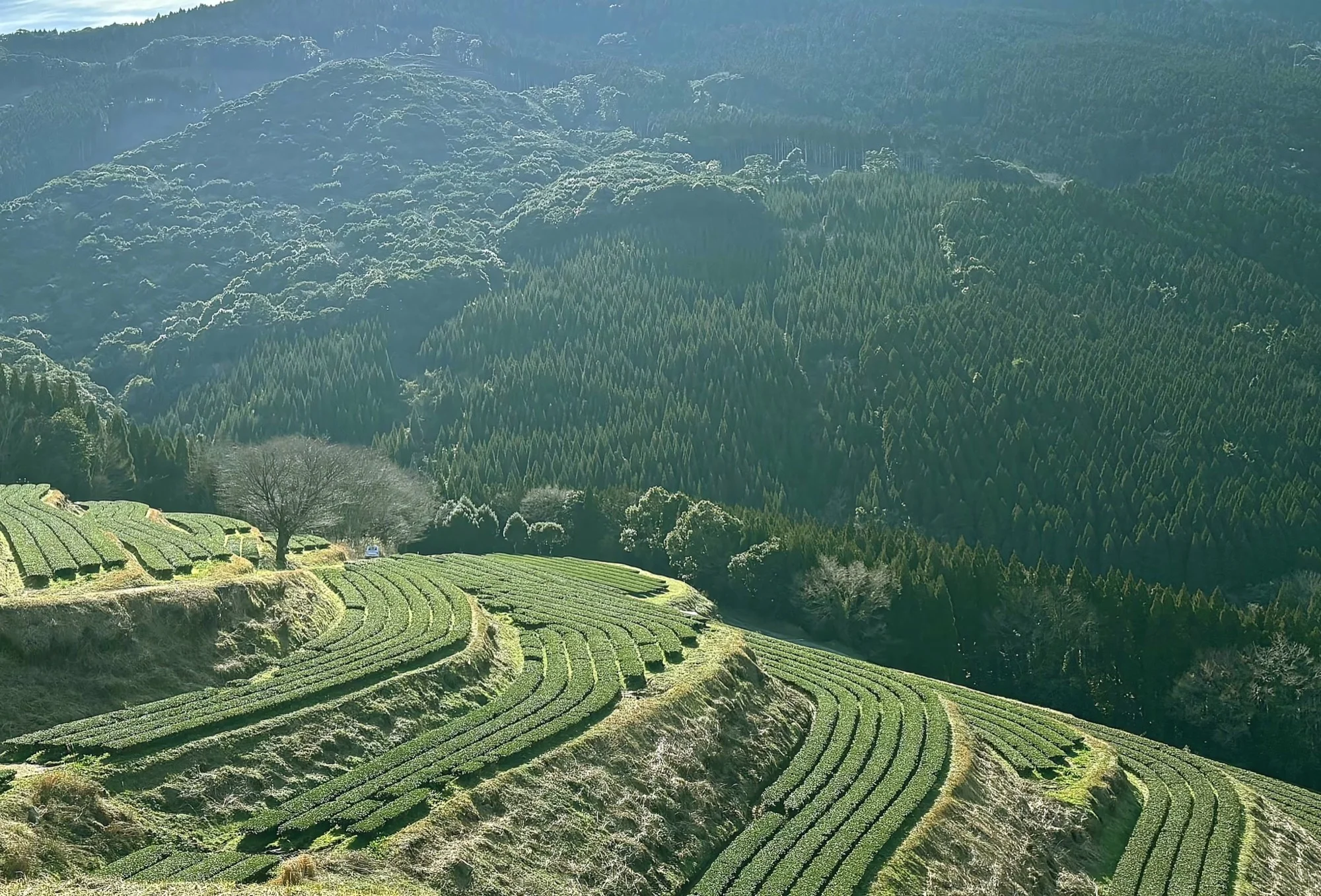
That’s the part most wholesale buyers never get to see. A spec’d single cultivar tells you the varietal, the prefecture, and the harvest year — for example, Saemidori from the Kagoshima highlands, 2026 first flush. Saemidori reads bright and sweet with a low-astringency finish, which is why it holds up well in a latte without turning bitter under steamed milk. You can’t reverse-engineer that from a label that just says “premium Japanese matcha.”
Blended vs single cultivar matcha
Blending isn’t a shortcut or a defect. It’s a craft. A blender’s job is to take several cultivars, sometimes from several regions and harvests, and build a flavor that lands in the same spot every single time you open a new lot.
That consistency is the whole point. If you run a high-volume cafe and your matcha latte has to taste identical in January and in July, a well-built blend is doing exactly what you need. It absorbs the year-to-year swings of weather and harvest so your drink doesn’t.
The tradeoff is traceability and character. A blend smooths out the peaks — the specific sweetness of a Saemidori, the deep umami of an Asahi — to hit a reliable average. And once cultivars and regions are mixed, “where’s it from” no longer has a clean answer. Most wholesale matcha sold to US cafes is blended and labeled vaguely (“organic Japanese,” “first harvest”) precisely because the blend is built to a price and a flavor target, not to a place.
| Single cultivar | Blend | |
|---|---|---|
| Source | One varietal, one origin, one harvest | Multiple varietals, often multiple regions |
| Flavor | Distinct, season-expressive | Consistent, engineered to a target |
| Traceability | Field-level | Region or country-level at best |
| Best for | Menus that sell the story | High-volume, taste-identical-every-time |
Why single origin matcha matters for a cafe menu
Here’s the moment it pays off. Six to twelve months into serving matcha, your baristas start fielding questions. Where’s this from? Why does it taste different from the place down the street? Customers who’d happily pay $7 for a single-origin pour-over expect the same answer from your matcha.
With a blend, the honest answer is “Japan, somewhere.” With a single cultivar, the answer is a sentence your staff can actually say with confidence: this is Saemidori from the Kagoshima highlands, first flush, picked this spring. That’s the same lever specialty coffee pulled a decade ago when it moved from “house blend” to named single-origin lots. It lets you charge for the tea, not just the milk and the labor.
It also gives your menu a reason to change. A single cultivar shifts a little season to season, which is a feature, not a bug — it gives you something new to feature, the way a wine list rotates. A blend, by design, never gives you that.
None of this means you should rip blends off your menu. A lot of strong cafe programs run a workhorse blend for the everyday latte and a single cultivar as the tea they actually talk about. The question is whether you’ve got at least one matcha on the menu that earns conversation.
What to ask a wholesale supplier
When you’re sourcing single cultivar matcha at wholesale, the label and the line card should answer four things without you having to dig:
- Cultivar — the actual varietal name (Yabukita, Saemidori, Okumidori), not just “green tea.”
- Region — prefecture at minimum (Shizuoka, Kagoshima, and so on), ideally the growing area within it.
- Harvest — the year and flush (first flush is the spring picking, generally sweeter and more delicate).
- Tasting notes — how it actually drinks: where it sits on sweetness, umami, astringency, and how it behaves under milk.
If a supplier can’t give you all four, what you’re buying is a blend with a single-origin label, or a supply chain that doesn’t know its own tea. Either way, you can’t pass the story to your customers, because the story was never there to begin with. The whole value of single cultivar — for you and for the person ordering the drink — is that it’s specific enough to mean something.
Where Hisa fits
This one comes down to quality, sourced on foot. Most wholesalers hand you a single tradeoff: a blend that’s consistent but anonymous, or a named lot that costs a small fortune and ships at a 50kg minimum. Hisa dissolves that by buying in person across Japan, year-round, so the single cultivar specifics — varietal, growing area, harvest, how it actually drinks — come standard, on a line card built for cafe-sized orders rather than a single famous estate.
So don’t take the label’s word for it. Start with a sample, whisk it the way your menu actually serves it, and decide from the cup whether your customers would taste the difference.