
How to Evaluate Matcha Samples Before You Buy
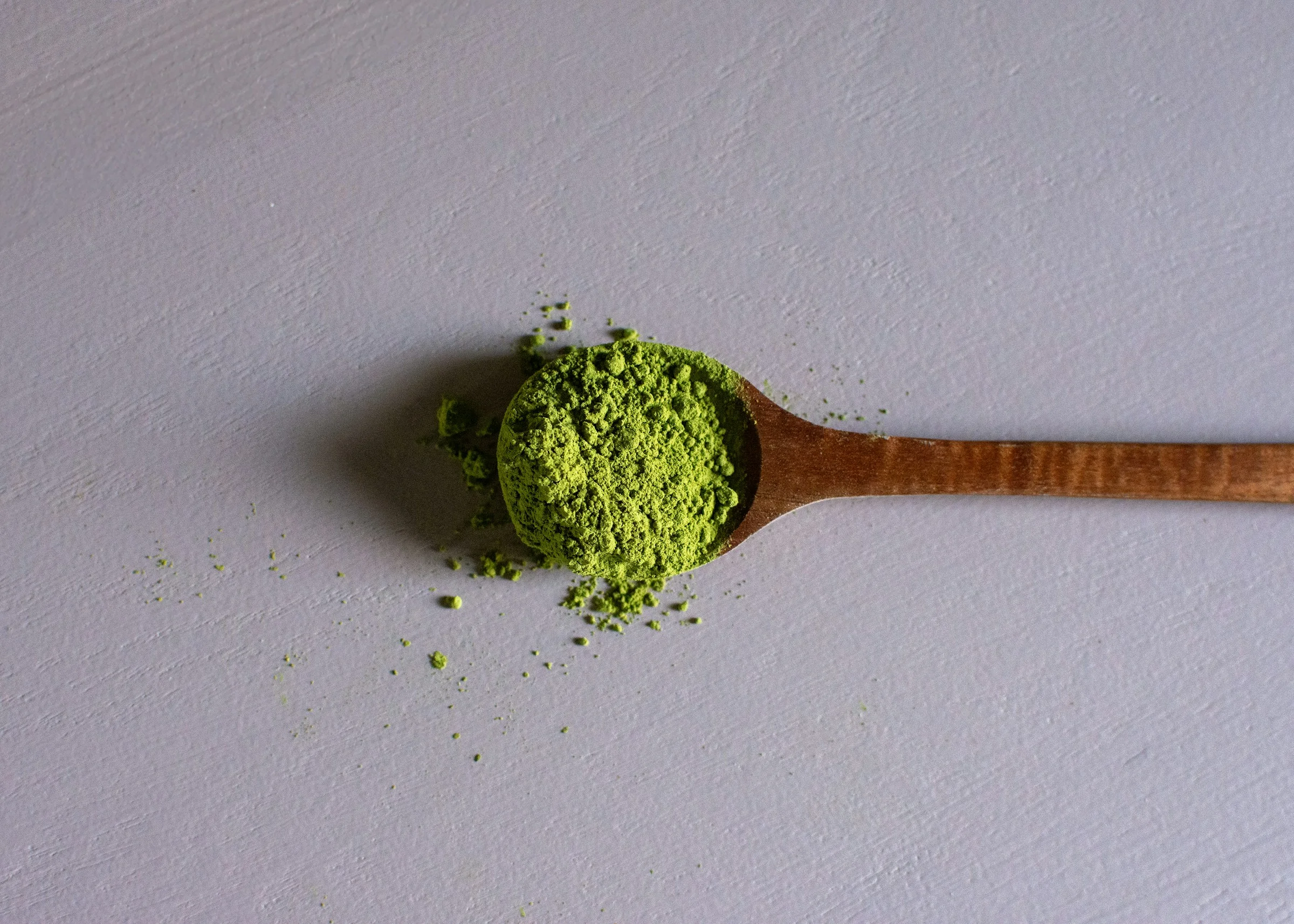
Buyer briefing
What to know
To evaluate matcha samples, run every sample through the same fixed sequence: a dry check on one consistent dark background under one light, aroma off the open bag, a sifted whisk test at your own bar's water temperature, then the latte you actually sell. Keep the matcha you serve now in the lineup as a reference, hide the labels, pour in random order, and have more than one person score each attribute on a scale you never change between sessions. Dry colour is the most over-trusted signal: it proves the leaf was shaded, but it also moves with grind fineness and storage age, and it predicts nothing about how the tea holds up in milk. Scored against a reference by a panel, the result is a measurement rather than an impression.
Decision checks
- Dry colour proves shading, not quality. It also shifts with grind fineness, storage age, and added colouring, and Japan's national tea competition scores tencha aroma and taste at 65 points each against 40 for appearance.
- Control everything except the matcha: same water and temperature, same dark background under one fixed light, labels hidden, poured in random order, and always alongside the matcha you serve now.
- The bowl tells you what the tea is; the latte tells you whether you can sell it. Run both, and run iced too if iced outsells hot, before you commit to a lot.
- A bench test cannot detect pesticide residue, heavy metals, or microbial counts. That is the lab's job and it arrives on the lot-matched certificate of analysis.
Most cafe buyers already have a method: smear a little on white paper, read the green, whisk one bowl, decide. It tells you which sample you liked, not why, and not whether you would rank it the same next month. The fix is to hold everything constant except the matcha, and to keep the matcha you pour now in the lineup as the reference.
How to evaluate matcha samples: set the bench first
The matcha is the variable; everything else is a control — and the controls are what most tastings skip.
- Score new samples against the matcha you serve now, not against memory.
- Number the cups and hide the labels. Whoever pours does not score.
- Same water, temperature, volume, whisk, and bowl for every sample.
- Same background and the same light for every dry check.
- More than one taster, each scoring alone before anyone compares.
Why colour is the most over-trusted signal
Colour earned its reputation honestly, and ISO/TR 21380, the international technical report that defines matcha, states that growing the leaves under shade increases the chlorophyll and L-theanine content and lowers the levels of catechins. Green and sweet come from one cause.
Now the limits. The dry appearance of matcha is judged on colour and the fineness of particle size together, so a finer mill reads brighter without a better leaf under it. The same standard specifies that matcha is free from any additives including colouring agents, which is exactly why colour is the easiest attribute to fake. Storage moves it too: a dull sample can be a warehouse failure, not a leaf failure.
Two upgrades come from Japanese appraisal. Japanese tea appraisal evaluates appearance by placing the tea on a black appraisal tray, and warns that lighting in the judging room must be uniform, because inconsistent light makes fair judging impossible. White paper flatters everything. At Japan’s national tea competition, tencha is scored out of 200 points, with aroma and taste worth 65 each, appearance worth 40, the colour of the infusion worth 20, and the colour of the spent leaf worth 10. Colour is a screen, not the verdict.
Whisk it, then put it in the drink you sell
Whisk the sample sifted, so clumping is scored as a sieve problem and not a tea problem. The ISO sensory method evaluates the tea liquor for the levels of frothiness, foam colour and taste, and specifies that correctly made matcha remains in a suspended state without agglomeration or sedimentation. A sample that sediments on your bench will do it again in a to-go cup, and grind is usually why. ISO puts the mean particle size of matcha in the range 10 μm to 30 μm with a median diameter of less than 20 μm, and that is a number you can ask a supplier to produce.
A 2026 first-flush Saemidori from the Kagoshima highlands will beat a Shizuoka Yabukita of the same harvest on nearly every bench metric: greener dry, sweeter in the bowl, rounder on the finish. Put both under oat milk in a standard latte and the ranking can invert, because Yabukita’s measured astringency is the trait that survives milk and sugar while the Saemidori’s sweetness gets buried by it. Only the milk test tells you which drink each one is for.
Matcha cupping for cafes: score it, don’t just taste it
ISO 4120 specifies the triangle test, a forced-choice procedure for determining whether a perceptible sensory difference exists between samples of two products. Take its shape, not its statistics: labels hidden, random order, one question before anyone argues about better — are these actually different?
At Japan’s national competition the final score is decided by the judges collectively rather than by any single taster. Score each attribute on a fixed scale and keep the sheets, so you catch drift the year a lot of the same name scores lower on umami. What the bench cannot tell you is whether the lot passed for residue, heavy metals, and microbial counts. That is the lab’s job, on the lot-matched certificate of analysis, read alongside the cultivar and harvest on the spec sheet.
Where Hisa fits
A bench protocol scores the sample, not the supply. The best cup in your lineup is a lottery ticket if nobody can name its cultivar, prefecture, and harvest. That is the tradeoff on quality: a matcha that scores well, or one you can reorder with confidence. Hisa buys in Japan on foot, across regions rather than through one producer, so the spec travels with the lot.
Tell us what you pour and your weekly volume, and we’ll put the lots worth testing next to your reference.